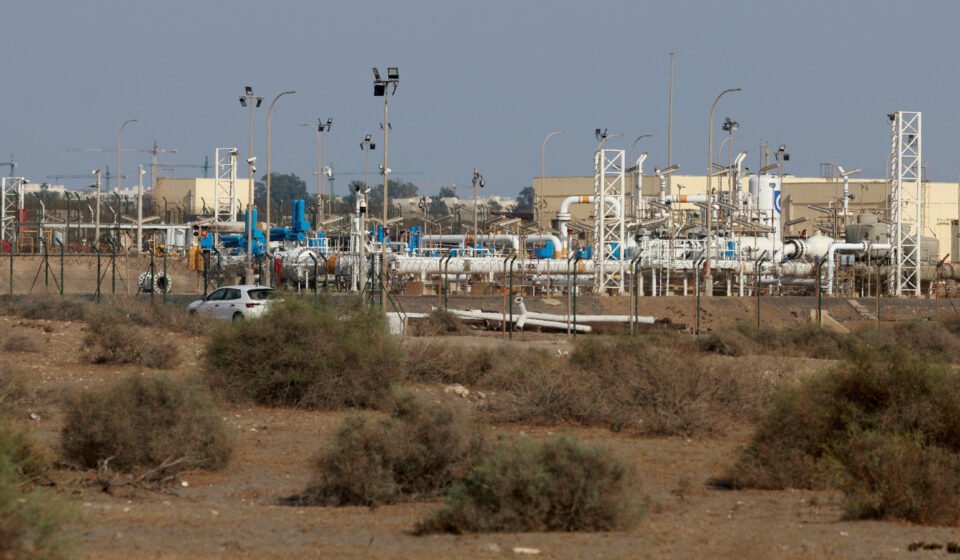
Algeria Bets on TSGP Gas Pipeline to Europe Amid Funding and Sahel Security Challenges

Algeria and Niger are pressing ahead with efforts to speed up a trans-Saharan pipeline project designed to carry natural gas from Nigeria to European markets. Last week, an Algerian delegation from the Ministry of Hydrocarbons met in Niamey to discuss accelerating technical studies on the pipeline route inside Niger and to set the next operational steps ahead of completing preparations for construction work.
The talks form part of continued technical and operational preparations for the Trans-Saharan Gas Pipeline (TSGP), which is intended to move Nigerian natural gas to Algeria. The move comes as Algeria has already made progress in preparing its own section of the project, one of the region’s most prominent energy infrastructure undertakings, aimed at strengthening energy links between West and North Africa.
Strategic Value for Europe
For Europe, the project’s strategic importance lies in offering an additional corridor for natural gas from West Africa, with a targeted export capacity of about 30 billion cubic meters per year once completed. That would give European countries another option for diversifying supply sources and reducing reliance on a limited number of suppliers, as they seek to cut dependence on Russian gas.
Funding Hurdles and Economic Prospects
In remarks to Asharq, economist and energy specialist Ahmed Al-Haidousi said the Trans-Saharan Gas Pipeline is not merely gas transport infrastructure but a long-term strategic investment linking energy resources in southern Nigeria to one of the world’s most important markets, the European market, via Niger and Algeria.
Al-Haidousi said the project has major opportunities, foremost among them the possibility of self-financing by the three countries. He explained that a studies office in Britain prepared a study assessing its feasibility and economic importance.
He noted that the initial estimated cost of the project ranges between $13 billion and $13.5 billion, pending completion of studies, route adjustments, and determination of the final cost.
Al-Haidousi believes the project’s economic viability and expected returns will attract foreign financing, particularly from international and African financial institutions such as the African Development Bank and infrastructure financing institutions on the continent, as well as European banks. He added that Europe may be interested in financing the project, given that it is the target market for the gas that will be transported from Nigerian fields through Niger to Algeria.
Algeria's Section Under Construction
On June 4, Sonatrach announced the official launch of construction work on the Algerian section of the project, starting from the Olf area in Adrar province in southern Algeria. In its Algerian section, the pipeline follows the Trans-Saharan Road route, from the Algeria-Niger border to the national gas distribution center at Hassi R’Mel.
The pipeline route was optimized to run alongside existing essential facilities, especially roads and gas pipelines in operation, to benefit from the logistical and technical synergies offered by existing infrastructure. From the strategic gas hub at Hassi R’Mel, the pipeline is to be connected to the national gas transmission network as well as to export facilities currently operating in Algeria, allowing its integration into the regional and international gas transport system.
The project is being carried out jointly by the Nigerian National Petroleum Company (NNPC), Niger’s SONIDEP, and Algeria’s Sonatrach group, with the aim of creating a new strategic corridor for exporting African natural gas to international markets, especially European ones.
The pipeline is set to extend about 4,122 kilometers across the territory of the three countries, targeting the transport of about 20 billion cubic meters per year in a first phase, with the possibility of raising export capacity to 30 billion cubic meters per year.
Algeria has infrastructure to facilitate the passage of gas coming from Nigeria via two routes: the Medgaz pipeline, from the Beni Saf area to Almería in Spain, and TransMed, which heads to Italy via Tunisia.
Reserves and Benefits for the Three Countries
The project’s ambitions rest on a huge reserves base in Nigeria, estimated at about 6.1 trillion cubic meters of natural gas, according to data from the Nigerian oil sector regulator at the start of 2026, covering proven and probable reserves.
Nigeria exports natural gas through liquefaction facilities, but the Trans-Saharan pipeline offers it an additional route to market its gas resources, especially to European markets, alongside its liquefied natural gas exports.
For Niger, the project is expected to provide economic opportunities through transit revenues, as well as the possibility of using gas to develop the electricity sector, according to what may be stipulated in commercial and technical agreements between the countries concerned.
For Algeria, hosting part of the pipeline route and using its gas transport and export infrastructure would allow it to earn transit fees and strengthen its position as a strategic corridor for energy supplies to European markets.
Security Challenges Along the Route
Alongside the economic challenges linked to financing the project, the security challenge stands out given the fragile security and political situation in Niger and the Sahel region, with growing activity by armed groups in several parts of the country.
The Tillabéri region in western Niger, bordering Mali and Burkina Faso, is one of the most prominent hotspots of violence, where ISIS and the Jama’at Nusrat al-Islam wal-Muslimin group linked to al-Qaeda are active. Threats extend to the Tahoua region in the northwest, which has seen attacks targeting civilians and government forces.
In the southeast, the Diffa region faces threats from Boko Haram and ISIS in West Africa, especially around Lake Chad and on the border with Nigeria. In the southwest, parts of Dosso record armed activity whose impact extends to border areas with Benin.
Challenges are not limited to these areas. Desert regions in the north, especially around Agadez and Madama, face risks of smuggling, organized crime, and the movement of armed groups across borders with Libya and Algeria. Attacks have also extended to the vicinity of the capital Niamey, including the attack that targeted Diori Hamani International Airport in January 2026.
These developments reflect multiple tension hotspots and a widening scope of threats in a country whose authorities face armed groups operating across borders, along with challenges related to the difficulty of extending security control over remote areas.
Journalist Hakim Bougrara said Algeria’s decision to send military units to Niger to protect its shared economic and energy interests with the country did not come out of nowhere but is based on assessments and data related to the nature of security risks in the region.
Speaking to Asharq, Bougrara noted that the security dimension is very important in securing investments and major strategic projects, foremost among them the Trans-Saharan Gas Pipeline linking Nigeria to Algeria via Niger. He explained that securing this project is not the responsibility of one country alone but requires coordination and cooperation among the three countries concerned, adding that the European Union is also concerned as one of the target markets for the gas the pipeline will carry.
On that basis, Bougrara argued that “the fragile security conditions in the Sahel region receive great attention from the Algerian side, which has adopted multiple approaches to dealing with security challenges in the region, out of its conviction that stability in the Sahel and securing facilities and economic investments are essential conditions for the success of major regional cooperation projects.”
Defense and security specialist Akram Kharief said Algeria is seeking, within its African strategy, to “expand its presence” on the continent through the energy sector, by investing in several fields, including electricity production in African countries and oil exploration and search in others, including Niger, Burkina Faso, Mali, and Libya.
In remarks to Asharq, Kharief indicated that Algeria seeks to secure the planned gas pipeline to transport gas from Nigeria to Algeria via Niger, considering that securing this project begins with providing stability and protection for the Nigerien government.
Kharief cited Algeria’s moves during the recent security turmoil in Niger, pointing to Algeria sending aircraft to support stability and counter any attempt to disrupt it. He added that Algeria strengthened its presence in northern Niger by sending truck convoys to supply the region with fuel, alongside the approval by both chambers of parliament to send units of the Algerian army to northern Niger to protect energy investments.
Kharief considered that Algeria’s current approach is based on securing the region by providing protection for the Nigerien government and helping and supporting the army in facing the multiple security fronts the country is experiencing. He explained that Niger faces, in his assessment, two fronts in the south and at least one front in the north, noting that Algeria also seeks to secure the border triangle it shares with Niger and Libya. He pointed out that this area has “strategic importance,” after it had in earlier periods become a corridor for smugglers, organized crime networks, and armed groups amid weak security control.
Economic and Security Cooperation
Algeria’s energy moves have been accompanied by other steps with security dimensions. In late August, Algeria announced sending four Sukhoi-30 fighter jets and a refueling aircraft to Niger in response to a request from the Nigerien authorities, following security events that Algeria described as an attempt to destabilize the country.
The Algerian parliament, in both chambers, also approved a request submitted by President Abdelmadjid Tebboune permitting the dispatch of units of the Algerian army to Niger. A statement from the Algerian presidency defined the mission of these units as protecting shared Algerian-Nigerien economic interests.
In the context of energy cooperation, Algeria and Niger launched in August a new phase of the Kafra oil field project in northern Niger by laying the foundation stone for a program to drill four exploratory wells, carried out by the National Drilling Company (ENAFOR), a Sonatrach subsidiary.
The program aims to complete geological data, determine reservoir characteristics, and confirm their productivity, ahead of assessing the economic feasibility of any future development of the field.
The Kafra field is located in the Agadez region, between the Iférouane and Bilma departments, about 85 kilometers from the Algerian border, and the exploration license covers an area of about 23,737 square kilometers.
Sonatrach’s activities in the field date back to 2005, when its subsidiary Sipax carried out seismic surveys covering about 2,200 kilometers of 2D survey and 760 square kilometers of 3D survey, before drilling two exploratory wells in 2018 and 2019 that helped reveal oil fields warranting further evaluation.

