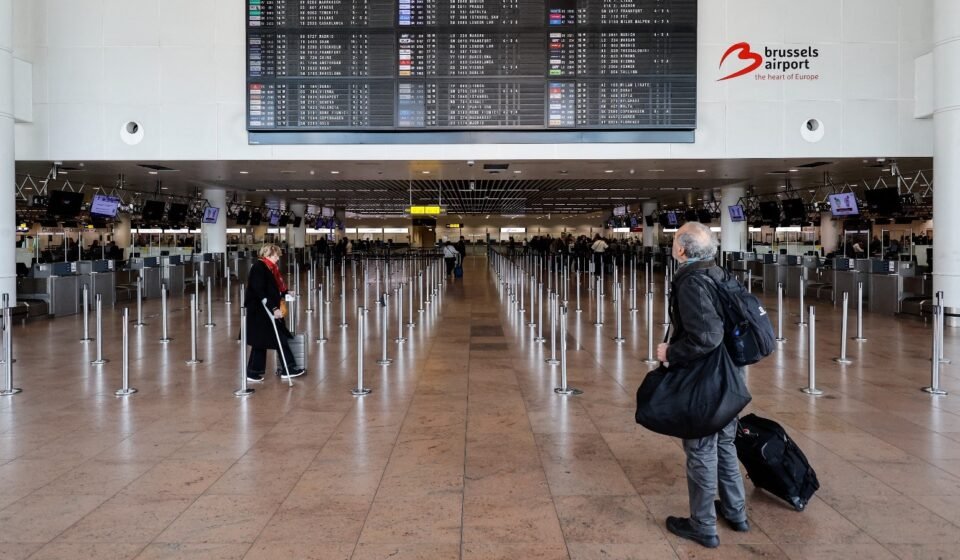
Belgium Strike Grounds All Flights at Brussels and Charleroi Airports as Air Traffic Controllers Join National Action

Belgium’s air transport sector faces widespread disruption on Monday after air traffic controllers joined a national strike against the government’s austerity policies, forcing the cancellation of all flights at Brussels Airport and Brussels South Charleroi Airport. The action is expected to affect thousands of passengers and could also spread to public transport in the Belgian capital, according to Politico.
Air Traffic Control Services Suspended for 14 Hours
Skeyes, the company responsible for air traffic control in Belgium, said it would be unable to provide its usual services between 7 a.m. and 9 p.m. local time, effectively halting commercial flight operations at the country’s main airports.
Brussels Airport confirmed on Sunday that all arriving and departing flights would be cancelled during the 14-hour stoppage. Brussels South Charleroi Airport announced that no aircraft would be able to take off or land during the same period.
Charleroi Criticizes Late Notice
Charleroi Airport management criticized Skeyes for giving late notice of the strike, saying the company informed it of the disruptions less than 36 hours before they began, even though the airport was prepared to operate normally.
In a statement, the airport accused air traffic controllers of treating airlines, passengers and airport workers with “complete disregard.” It warned that the strike would affect thousands of travelers and around 3,400 people employed at Charleroi, and called on Belgian authorities to draw up a coordinated plan to prevent such disruptions from recurring.
Skeyes Says Staffing Below Safety Requirements
Skeyes said a group of air traffic controllers had informed it they would take part in the national strike scheduled for Monday. The company explained that the number of available staff would not be sufficient to manage normal air traffic in line with optimal safety standards, forcing it to temporarily suspend affected services.
Unions Protest Austerity and Economic Reforms
The strike is being organized by Belgium’s main trade unions in protest against the spending cuts and economic reforms pursued by the government of Prime Minister Bart De Wever. Public transport in Brussels is also expected to be affected, and airports have urged travelers to check with their airlines before heading to the airport to verify the status of their flights.
Belgium's Austerity Plan Targets €10 Billion in Savings
The Belgian government is seeking to implement an austerity and reform plan aimed at saving around €10 billion by 2029, in an effort to reduce the budget deficit and control rising public debt.
The plan comes as Belgium faces mounting financial pressure. The budget deficit has exceeded 5% of gross domestic product, while the European Commission expects public debt to rise above 110% of GDP.
Health Care and Social Benefits Under Review
The proposals include cuts to spending on health care and social benefits. The government is considering saving around €4 billion in health expenditure by increasing patients’ contributions to medical consultation costs and tightening the conditions for benefiting from the health compensation system.
It also aims to save around €750 million by encouraging people with long-term illnesses to return to work more quickly.
Tax Measures and Other Savings
On taxation, the government has abandoned a proposal to raise the basic value-added tax rate from 21% to 22%, but it is studying tax increases on certain goods and services, including firewood, fertilizers and hotel accommodation.
The plan also includes reducing subsidies to companies and saving around €500 million in migration and asylum spending. In addition, it involves reviewing a tax reform that had aimed to increase workers’ net income, reducing its expected cost by around €500 million.
Union Opposition
The plan faces opposition from major trade unions, which argue that the proposed measures will increase the burden on families and employees, particularly amid rising living costs and the reforms’ impact on pensions, wages and working conditions.